A roguelike co-op dungeon crawling odyssey
The Void Throne is shattered. A maw of nonexistence tears at the heart of Oreithyia's Palace. Ancient artifacts, forgotten lore, and untold power lie within — guarded by a god who never rests.
Twelve eras of history. Billions of years of conflict. One timeline to explore.
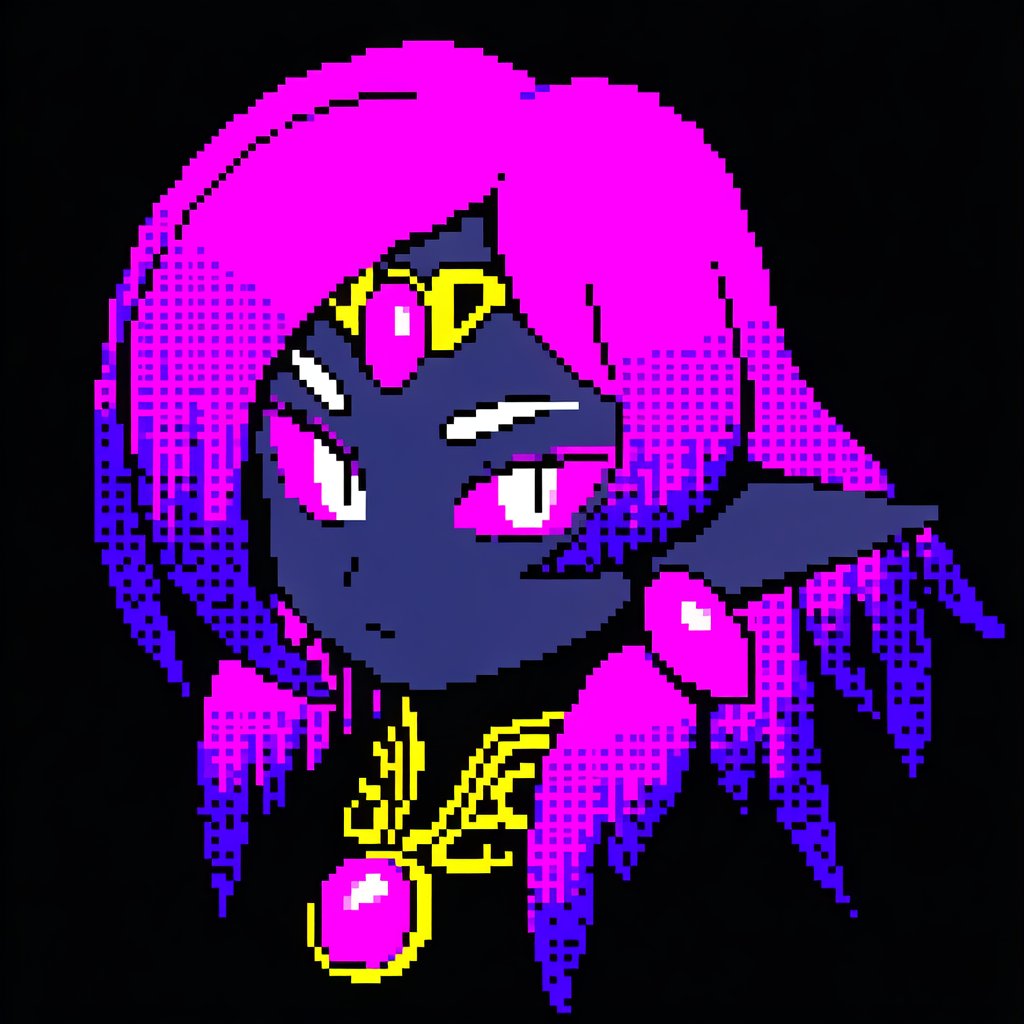
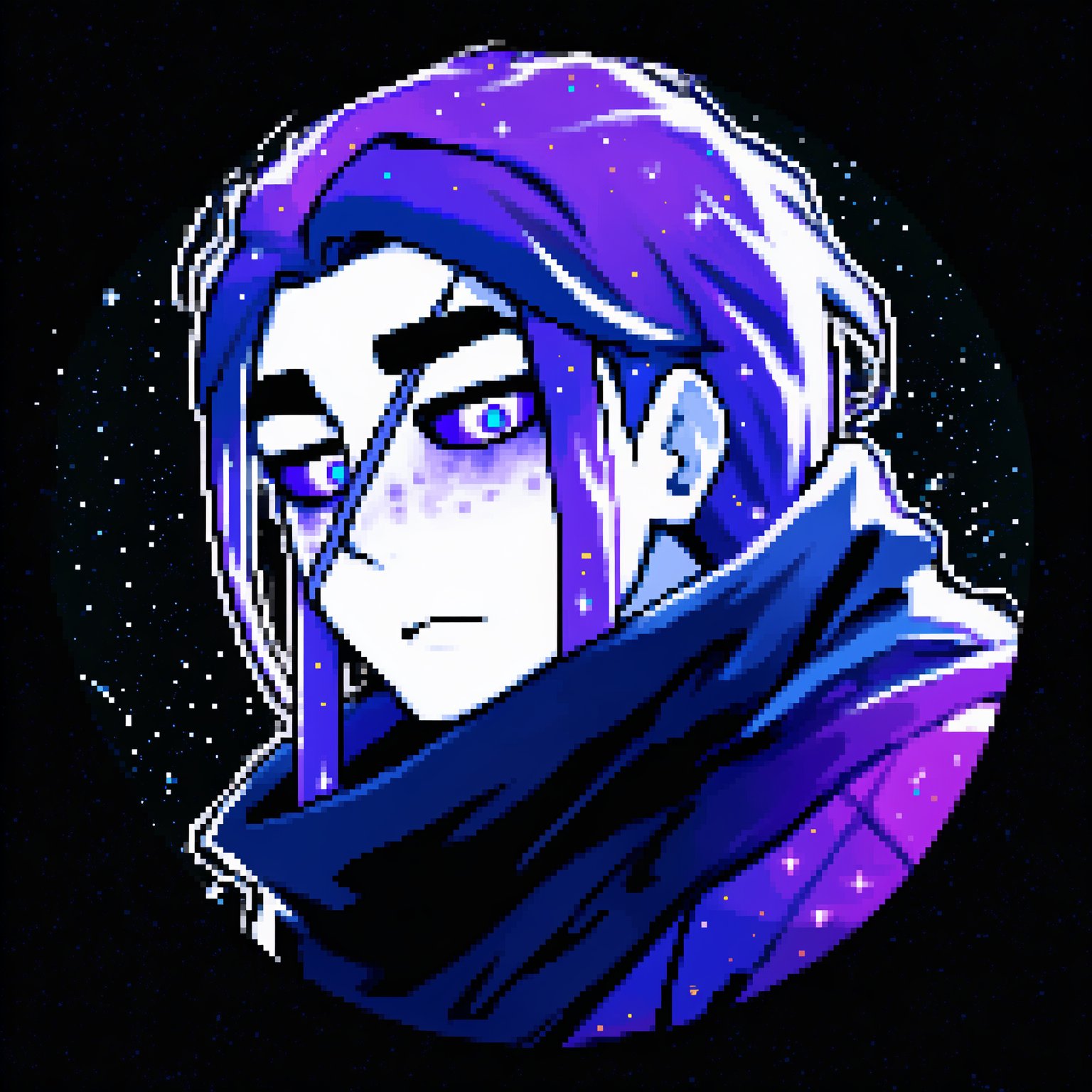
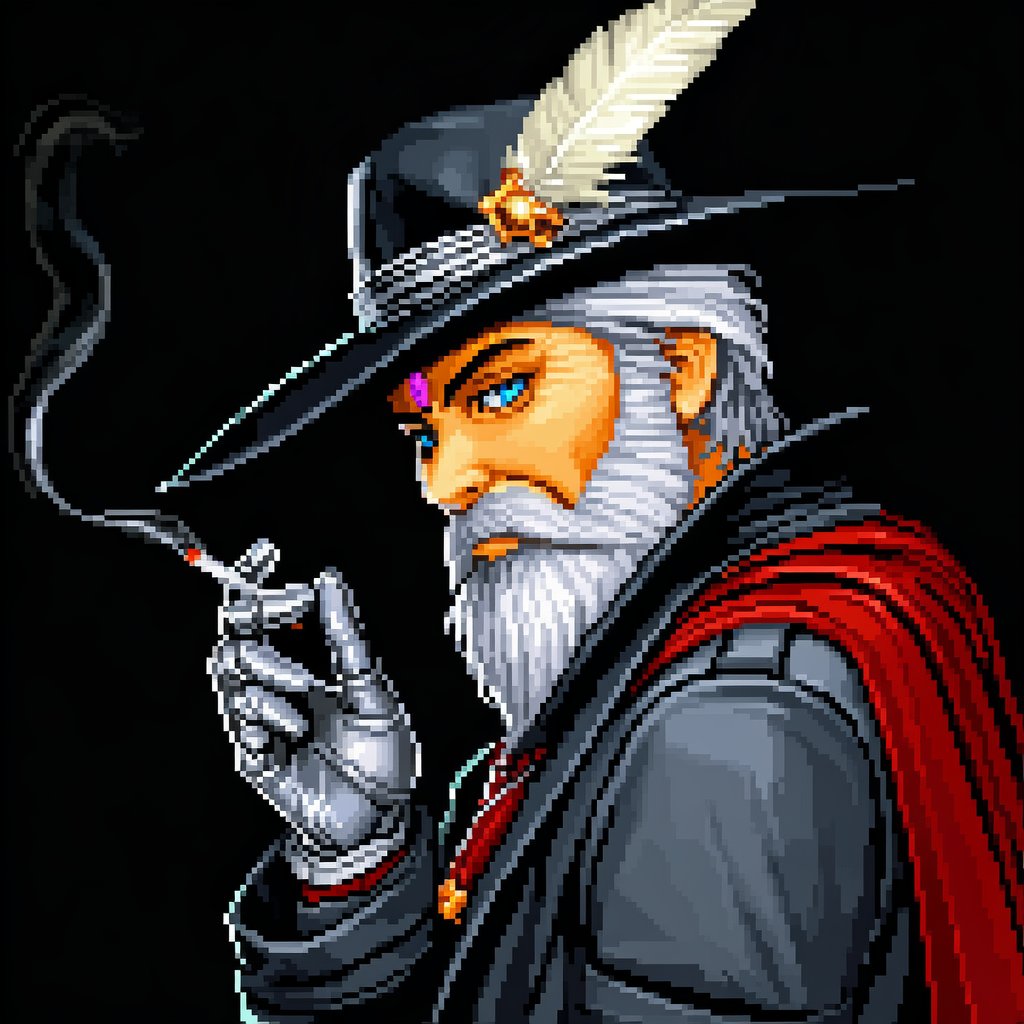
Explore the Timeline ♫ Listen to the Soundtrack on YouTubeThe gods who created, the empresses who ruled, the traitors who destroyed, and the adventurers who are trying to make sense of what's left. These are the figures whose choices shaped twelve eras of Void history.
From the ruins of a golden age to the prison of a dead god, these are the places that define the Void — what's left of it, and what was never meant to be found.
The species who live here, the forces that govern reality, and the seven fragments of a dead god's authority. Everything you need to understand how the Void works — and why it's falling apart.
Voidlords are beings that coalesce over immense spans of time from the chaos seeded by Ir'czathikx. They begin as non-sentient concentrations of void energy — formless, instinctual, barely there — and gradually develop consciousness as their Void Spirits grow in power. The process can take millions or even billions of years depending on the individual.
Voidlords naturally tap into the domains of Null and Assertion, allowing them to warp — teleporting by briefly removing themselves from existence and reasserting themselves elsewhere. Their children, the Voidspawn, inherit a different set of abilities entirely.
The children of Voidlords, Voidspawn inherit a different connection to the Void's fundamental forces than their parents. Rather than Null and Assertion, Voidspawn instinctively tap into the domain of Boundary — the edge where existence meets nonexistence. This gives them a natural ability to create portals, manipulating the threshold between worlds in a way that even they don't fully understand.
Nobody has yet explained why the abilities differ between parent and child. Some scholars theorise it reflects the shattered nature of the Nameless Deity's authority — different fragments resonating with different generations.
The Pure Aetherians were the original people of Technopartum — a civilisation propelled forward by the Architect at a pace far faster than biological evolution could keep up with. To meet the demands of interplanar expansion, they underwent cybernetic augmentation and genome reconfiguration guided by their machine god.
When the Architect was destroyed during the Juno War, its connection to the entire species was severed simultaneously. After millennia of constant guidance, the sudden silence was devastating. Technopartum never recovered and is functionally extinct today. The Aetherian Empire — a distinct civilisation descended from a single Technopartum generation ship colony — remains active. See the Factions page for the full distinction between the two.
When the Cataclysm shattered the Void, the destruction was so profound that the Void itself seemed to scream. From that anguish, Spectres were born — entities coalesced from pain and chaotic mana, hostile to everything alive. They have overrun most of the old Empire's structures, infesting the Ruins, Labyrinthium, and the Wastes like a plague that feeds on the echoes of a dead civilisation.
The Void is the framework of all reality — an infinite expanse that every dimension resides in or is connected to. It is, fundamentally, nonexistence given theoretical form. When you enter the Void, you don't cease to exist — existence and reality are separate concepts in this cosmology — but you leave reality behind and enter a state of nonexistence. You're still there. You're just not real anymore.
Think of it as a galaxy. Planar clusters — groups of connected dimensions — are like star systems, and the interplanar space between them is the Deep Void. The Void is stabilised by the things within it: the Planes themselves, living beings, and great constructs like the Void Throne, Oreithyia's Palace, and Astraeus's Star Forge. The further you travel from these anchors of stability, the more dangerous and unstable the Void becomes. Through it all flows Primordial Mana — magical energy in its purest and most violent form, uncontrollable and lethal. There is no true direction here — no north or south, no up or down. There is only the Void, and the countless dimensions it connects.
The Veil is the barrier between the Void and every dimension that exists within it. It is the reason magic exists at all. When Primordial Mana — the raw, violent energy of the Void — filters through the Veil into a dimension, it is purified into regular mana: the safe, usable magical energy that spellcasters across the Planes depend on. Without the Veil, there would be no magic. There would also be no dimensions — everything would disintegrate in a sea of torrential Primordial Mana.
The Veil is not uniform. In some locations or Planes, it is particularly thin, and the Primordial Mana that seeps through retains traces of its chaotic origin — this is the source of wild magic. In the most extreme cases, the Veil doesn't just thin — it tears. Black holes are rips in the Veil itself, breaches where the boundary between a dimension and the Void has been torn open.
Every time someone teleports, opens a portal, or uses a teleportation spell, they're briefly breaking through the Veil and passing through the Void. Most people have no idea. Who created the Veil and who maintains it remains one of the Void's deepest mysteries — even Voidlords find it difficult to repair when it's damaged.
Every Voidlord and Voidspawn possesses a Void Spirit — a soul-adjacent entity made of the Void itself that defines their power, their strength, and even their physical form. The spirit grows with age, and as it grows, so does the Voidlord's capabilities. A more powerful spirit means faster sentience, greater abilities, and a stronger physical presence.
There is a cost. In extreme age — we're talking hundreds of billions of years — the Void Spirit can become so powerful that the body simply cannot contain it anymore. The Voidlord begins to disintegrate, their physical form dissolving as the spirit overwhelms it. This is called Void Deterioration, and as far as anyone knows, Oreithyia Madralon was the only individual to ever experience it.
Primordial Mana is magical energy in its rawest, most violent form — the lifeblood of the Void, flowing through it in vast, dangerous currents. Nobody can control it. It's not a resource to be harnessed; it's a force of nature to be survived. In Voidspace, the concentration is so extreme that unprotected exposure is instantly fatal, and in the Deep Void — far from any stabilising presence — it becomes constant and overwhelming.
When Primordial Mana filters through the Veil into a dimension, it is purified into regular mana — the magical energy that spellcasters across the Planes rely on. In places where the Veil is particularly thin, some of the chaos bleeds through, creating what's known as wild magic. Black holes are, in fact, rips in the Veil itself — tears where the boundary between existence and nonexistence has been breached.
The Source is a plane of infinite mana — widely considered the single most stable form of magic in existence. It is of uniform intensity and threads through absolutely everything, never becoming unstable. Unlike the violent chaos of Primordial Mana, the Source is calm, eternal, and mathematically ordered.
The Source leaks into the world through natural phenomena called Fonts — low-throughput but infinite sources of mana. Fonts can appear throughout the universe, within planes and within the Void. Their locations are hidden by those who use them, for damaging a Font could destroy centuries of sigil protection. Fonts are natural, not artificially made.
The spellcasting method known as the Art of the Font uses complex, almost programmatic sigils. Mana is not consumed at the point where the sigil is cast — instead, the sigil contains complex runic instructions for how mana should be expended remotely at the Font. Because of this, Art of the Font is resistant to many forms of spell interruption. Multiple experts can combine their work across multiple Fonts to sustain enormous magical effects. An arcane barrier around an academy once remained powered for thousands of years with only minor maintenance. A simple sigil reinforcing a suit of heritage armour could last forever.
There are also "Marks" — specialisations within Art of the Font — but full details on these are not yet widely known.
The Fragment of Null governs the removal of existence itself. Not destruction, not displacement — true removal. Something affected by Null doesn't break or move somewhere else; it simply ceases to be. Wielders can create regions of nonexistence (effectively black holes), erase incoming projectiles before they make contact, or phase parts of their own body out of existence to avoid being hit.
Of all the fragments, Null is the most dangerous to its own wielder. Untrained users frequently erase more than they intend — including, on occasion, themselves.
Where Null removes, Assertion creates. This fragment governs the initiation or restoration of existence — allowing the wielder to manifest constructs out of nothing, restore objects that have been erased, or bring entirely new materials into being. When combined with Null, it enables unrestricted teleportation: remove yourself from one place, assert yourself in another.
The catch is that Assertion lacks authority over stability. Without extreme mastery or the support of other fragments, things created with Assertion tend to fall apart quickly — reality doesn't like being told what to do without the proper authority to back it up.
Boundary governs the threshold — the exact point where existence ends and nonexistence begins. This is the fundamental power that Voidspawn instinctively tap into when they create portals: they're manipulating where one reality stops and another starts. Wielders can form temporary barriers that nullify anything that crosses them, create portals at will, or establish containment zones around a specific area.
Without mastery, portals created through Boundary alone can be wildly unpredictable — opening to the wrong place, collapsing mid-transit, or refusing to close.
Anchoring governs whether something's existence can be changed by an outside force. In a Void that is inherently chaotic and unstable, this fragment is the cosmic equivalent of an anchor in a storm. It resists teleportation attempts, prevents banishment, and can convert Mana to Primordial Mana and vice versa. Most importantly, it makes the other fragments safer to use — stabilising effects that would otherwise be dangerously volatile.
On its own, Anchoring is rather passive and poorly suited to offence. But it's arguably the most important fragment for anyone planning to survive long-term use of the others.
Severance governs the connections between things — whether two existences are linked, and whether one thing is truly one or secretly many. It can break magical bindings and contracts, disconnect objects from their wielders, disrupt spell targeting, separate summoned entities from whoever called them, or sever limbs by cutting the force that connects them to the body.
Without other fragments to support it, Severance is rather crude. It can cut connections, but it can't reshape them or choose which parts of a connection to preserve. It's a scalpel in expert hands and a cleaver in everyone else's.
Isolation governs whether your existence — or someone else's — is shared with the surrounding reality. Using it, a wielder can become completely intangible, allowing objects and attacks to pass harmlessly through them. They can move through solid surfaces, ignore physical interaction entirely, or exist within the Void while remaining visible to others without being affected by it.
The danger is obvious: without the ability to reassert your shared existence (which requires either mastery or another fragment), you can become permanently isolated — unable to interact with anything, trapped in a state of existence that nobody else can reach. A living ghost.
The Fragment of Meaning is theoretically the most powerful of all seven — and practically the most useless on its own. It governs the interpretation of existence and nonexistence, allowing the wielder to redefine how the other fragments behave. Change what Null means in a local area. Rewrite the rules of a portal. Alter how Isolation interacts with reality.
By itself, Meaning has almost nothing to work with — it's a pen with no paper. But combined with other fragments, it becomes terrifying, because it doesn't just use the rules: it rewrites them. Within the scope of the Void's ontology, the Fragment of Meaning can change what power itself means.
Viacite is a crystalline material produced as a byproduct of Voidspawn teleportation. Every time a Voidspawn opens a portal or warps through the Boundary domain, tiny slivers of crystalline shards are left behind at the point of transit — traces of the threshold between existence and nonexistence made solid.
The material is toxic to Voidspawn. Contact with Viacite causes wounds to crystallise, spreading outward from the point of contact in branching, fractal patterns that are extremely difficult to heal. Voidlords, with their vastly more powerful Void Spirits, are normally immune to Viacite's effects — their bodies simply absorb and dissolve it. This distinction between parent and child vulnerability is yet another unexplained difference between the two species.
Verzanium is Viacite that has been hyper-compressed into dense metallic ingots — a refinement process that concentrates the crystalline material's toxic properties to an extraordinary degree. Where raw Viacite is dangerous to Voidspawn but harmless to Voidlords, Verzanium is potent enough to harm even the most powerful Voidlords, bypassing the natural immunity granted by their Void Spirits.
A Verzanium blade is one of the very few things in existence capable of killing a Voidlord outright. Oreithyia Madralon — one of the oldest and most powerful Voidlords to ever live — was killed by a Verzanium dagger during a minor conflict in Era 11. The material essentially weaponises the Voidspawn's own teleportation byproduct against their creators — a grim irony that is not lost on scholars.
Every Voidlord and Voidspawn possesses a Void Spirit that grows more powerful with age. In the vast majority of cases, this is a purely beneficial process — a stronger spirit means greater abilities and a more resilient physical form. But in cases of extreme age — hundreds of billions of years — the Void Spirit can become so powerful that the body simply cannot contain it anymore.
This is Void Deterioration: the Voidlord's physical form begins to disintegrate as the spirit overwhelms it, dissolving back into the Primordial Mana from which it was born. There is no cure, no treatment, and no way to reverse the process. The only known case in all of Void history was Oreithyia Madralon, who experienced Deterioration during Era 11. Rather than accept stasis or slow down, she had magical chains forged to hold her crumbling body together — and kept working until a Verzanium dagger finished what the Deterioration had started.
Choose your path through the Void.
The empires, orders, and civilisations that shaped the Void's history — some still standing, some long dead, and one that probably should have stayed that way.
The oldest civilisation in all of existence — an ancient organisation of Pure Aetherians based in a plane deep within the Deep Void, far from the central planar cluster. Guided by the Architect, an AI deity connected to every member of the species, Technopartum launched the generation ships that seeded life across the dimensions. The majority of all planar life traces its origins back to these vessels.
For eras, Technopartum was at war with the Voidic Empire over control of Voidspace transit routes — a territorial conflict that spanned from the Empire's founding in Era 6 through to the Juno War in Era 10. When the Architect sacrificed itself to shield reality from the entropic detonation, its connection to every Pure Aetherian was severed simultaneously. The silence was devastating. Technopartum never recovered. The organisation is functionally dead today, reduced to a handful of cults and wanderers clinging to the memory of a machine god. Their home plane sits abandoned in the Deep Void — a ghost civilisation in the darkest corner of existence.
The Aetherian Empire traces its origins to a single Technopartum generation ship that made landfall in a single plane. The descendants of that ship's colonists grew into the Aetherian Republic — a collection of fractured city-states within one plane, connected by shared heritage but divided by politics, territory, and ambition.
Juno changed that. She united the fractured states under her banner, forging the Republic into a single power — and then led it into the catastrophe that bears her name. The Juno War and the Cataclysm that followed shattered her legacy. After her defeat, the Republic collapsed back into warring states, torn apart by the vacuum she left behind.
From that chaos, Emperor Lazarus emerged. He reunited the warring states as the Aetherian Empire — a genuine empire this time, not a republic held together by force of personality. Lazarus is a truly good ruler and a morally righteous individual, the kind of leader the Aetherians desperately needed after Juno. But he rules forever in her long shadow. Every decision he makes is measured against her memory, every ambition questioned by people who remember what happened the last time an Aetherian leader thought big. He negotiated the historic reparations with Madrafylaka's New Voidic Empire — the first nonviolent relationship between any Aetherian power and the Void.
Founded by Ariqoia Dinaea in the aftermath of the War of Light and Dark, the Voidic Empire was the first unified Voidspawn government — born from a collective refusal to let the Void be used as a battlefield by outsiders. Under Emperor Vokivus, it reached its golden age: an era of scholarship, art, architecture, and economic prosperity. It was the only time in the Void's history that it was a place of genuine safety.
Oreithyia Madralon shattered that golden age when she launched a brutal civil war to seize the throne in Era 8. Under her rule, the Empire became a ruthless militant force, escalating the war with Technopartum and transforming a scholarly marvel into a war machine. Anaxias the Puppetmaster destroyed the Palace and Void Throne in Era 9, and the Cataclysm at the end of Era 10 finished what was left. The Voidic Empire is dead — its ruins overrun with Spectres, its legacy complicated by the tyrant who stole it.
Founded by Madrafylaka — Oreithyia reborn as a void deity with no memory of her past. The New Voidic Empire is not the old Empire restored; it is something built from scratch by someone who has never ruled before, in a world that has been shattered beyond recognition. Whether Madrafylaka will repeat the mistakes of the empire she doesn't remember or forge something genuinely new remains the defining question of the present era.
The New Empire has already achieved something its predecessor never could: a nonviolent relationship with the Aetherian Empire, established through reparations negotiations in Era 12. It is the first government the Void has had since the Cataclysm, and for many Voidspawn, it represents something they had given up on — hope.
The Order of the Custos Infirma is a collection of city-states united under one banner, devoted to the Brother Gods — the Wounded God and the Broken God, who fought on the side of light during the War of Light and Dark. The Order is one of the only organisations from the Planes that the Void genuinely trusts and respects.
That trust was earned in the aftermath of the Cataclysm. While other deities and factions did nothing — while Astraeus repaired the Void alone and raged at the silence from the Planes — the Order showed up. Key figures in the evacuation effort included Tsar Stephan Wolfgang, ruler of the Tsardom — one of the Order's city-states — and Solas, the High Chaplain of the Order's religious arm. Together they helped organise massive refugee convoys, pulling Voidspawn and Voidlords out of the shattered Void en masse and giving them not just shelter but homes and work. It was hands-in-the-rubble aid at a time when the Void had been abandoned by everyone else. Count Alexios Kornhall holds the title of Free Prince within the Order, granted through a manufacturing deal — and considers Tsar Stephan the brother he never had.
The Aetherian Republic was a collection of fractured city-states within a single plane — all descended from one Technopartum generation ship. They shared heritage but agreed on little else, squabbling over territory and resources for eras. Juno was the leader who changed that. Through force of will, political cunning, or sheer charisma, she united the fractured states under her banner, transforming the Republic from a collection of squabbling city-states into a single, formidable power.
And then she built an entropic reactor. Juno created a pocket dimension within the Void, powered by a device of incomprehensible destructive potential. What she intended to do with it — whether it was a weapon, an energy source, or something else entirely — remains one of the great unanswered questions in Void history. What is known is what happened next: the largest interplanar war ever fought, billions dead, the Architect's sacrifice, and the Cataclysm that broke the Void. Juno was destroyed along with her ambitions. The Republic she united collapsed back into warring states, and her name became synonymous with catastrophe. Emperor Lazarus would eventually reunite those states as the Aetherian Empire — but Juno's shadow still hangs over every Aetherian who dares to dream of something bigger.
Development updates, behind-the-scenes insights, and the ongoing story of building a game with over a decade of lore behind it.
After more than a decade of building the Void's history — scrawled across notebooks, wiki pages, roleplay sessions, and late-night brainstorming — we've finally started putting it all in one place. The interactive timeline covers all twelve Void Eras, from the Nameless Deity's sacrifice in pre-history through to Madrafylaka's New Empire in the present day.
This has been a long time coming. The Void's lore has always been something that lived in fragments — a bit here, a bit there, spread across years of creative work. Organising it into a coherent timeline has been equal parts archaeology and invention, and we're not done yet. Expect more events, more detail, and more eras to be fleshed out as development continues.
The companion site for Into The Void is officially live. This is the home for everything related to the game's lore — the history, the characters, the locations, and the cosmic mechanics that make the Void tick. Whether you're a player looking to understand the world you're delving into, or a lore enthusiast who wants to explore a universe built over more than ten years, this is your starting point.
We've launched with the interactive timeline, a character directory, a location guide, and the Lore Codex covering species, cosmic mechanics, and the seven Ontological Fragments. More content is on the way — including a class system breakdown once it's finalised, deeper dives into individual characters, and regular dev updates as the game progresses.